
Table of Contents
In September 1971, a group of young speleologists from Ancona was wandering around Mount Valmontagnana, in the Apennine mountains of Le Marche region, when they spotted a crack in the rock, barely 20 centimeters (about 8 inches) high. Just their cup of tea or, as we say in Italian, pane per i loro denti (literally “bread for their teeth”)!
Super curious, they widened it with their hands and squeezed inside. That’s when they felt it: a draft of air blowing out from the gaps in the rock. And that air had to come from somewhere, right?
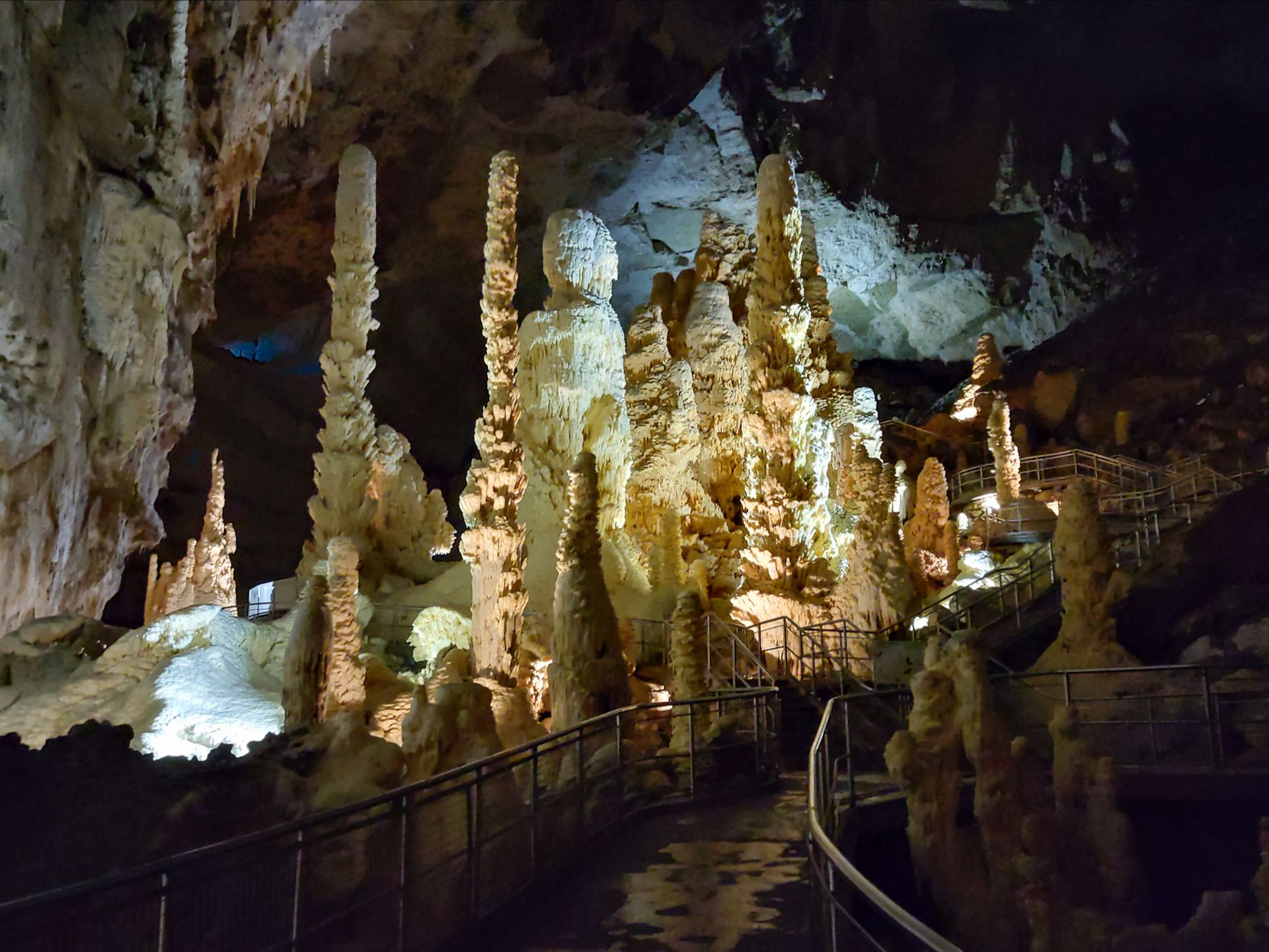
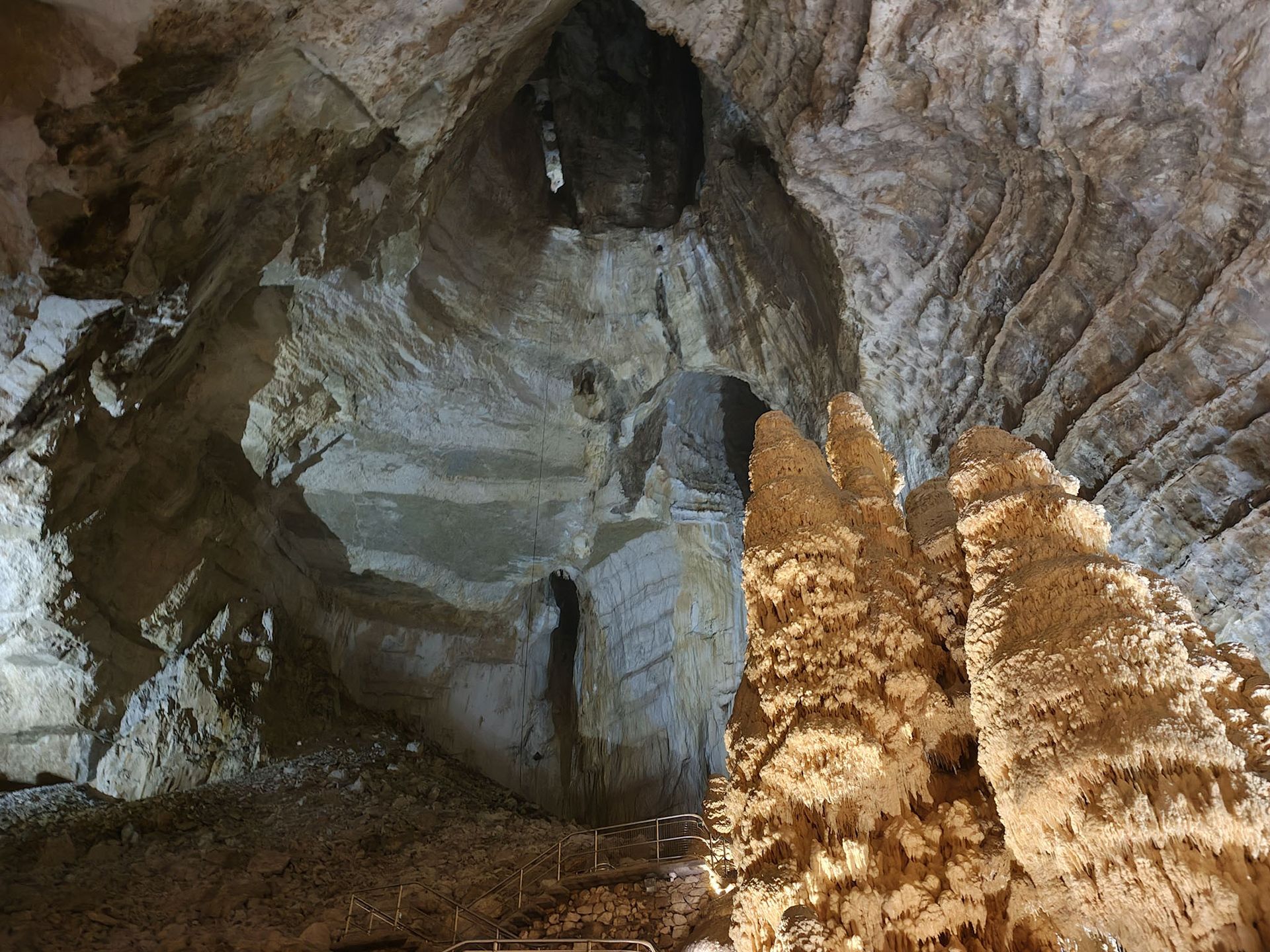
So they kept going, until they reached the edge of a chasm opening onto total darkness. They couldn’t see the bottom, and they had no idea where they were or or what lay ahead. Now, most of us would have taken that as a sign to go home. They, instead, grabbed a rock and threw it into the void to find out how deep it went. Well, very, very deep… they had just discovered one of the largest underground cave systems in Europe!
Their instinct gave Le Marche one of its biggest attractions, and Italy a true jewel of its natural heritage. Their names are now carved in marble at the entrance, and if you know a bit of Italian and want to hear the story straight from the source, I leave you a link to a video with the first two guys who went down (they were picked by drawing matchsticks!): watch here.
Ready to go underground? Here are some notes on what to expect, along with some tips.
So, what exactly are the Frasassi Caves?
The Frasassi Caves are a network of karst caves stretching for over 25 kilometers underground, though only a small part is open to visitors. Inside, there are incredible natural sculptures shaped over millions of years by the waters of the Sentino river, which trickled through the rock and slipped into the mountain’s deepest cracks. I won’t go into the technical details here, the local guides explain them much better than I ever could.
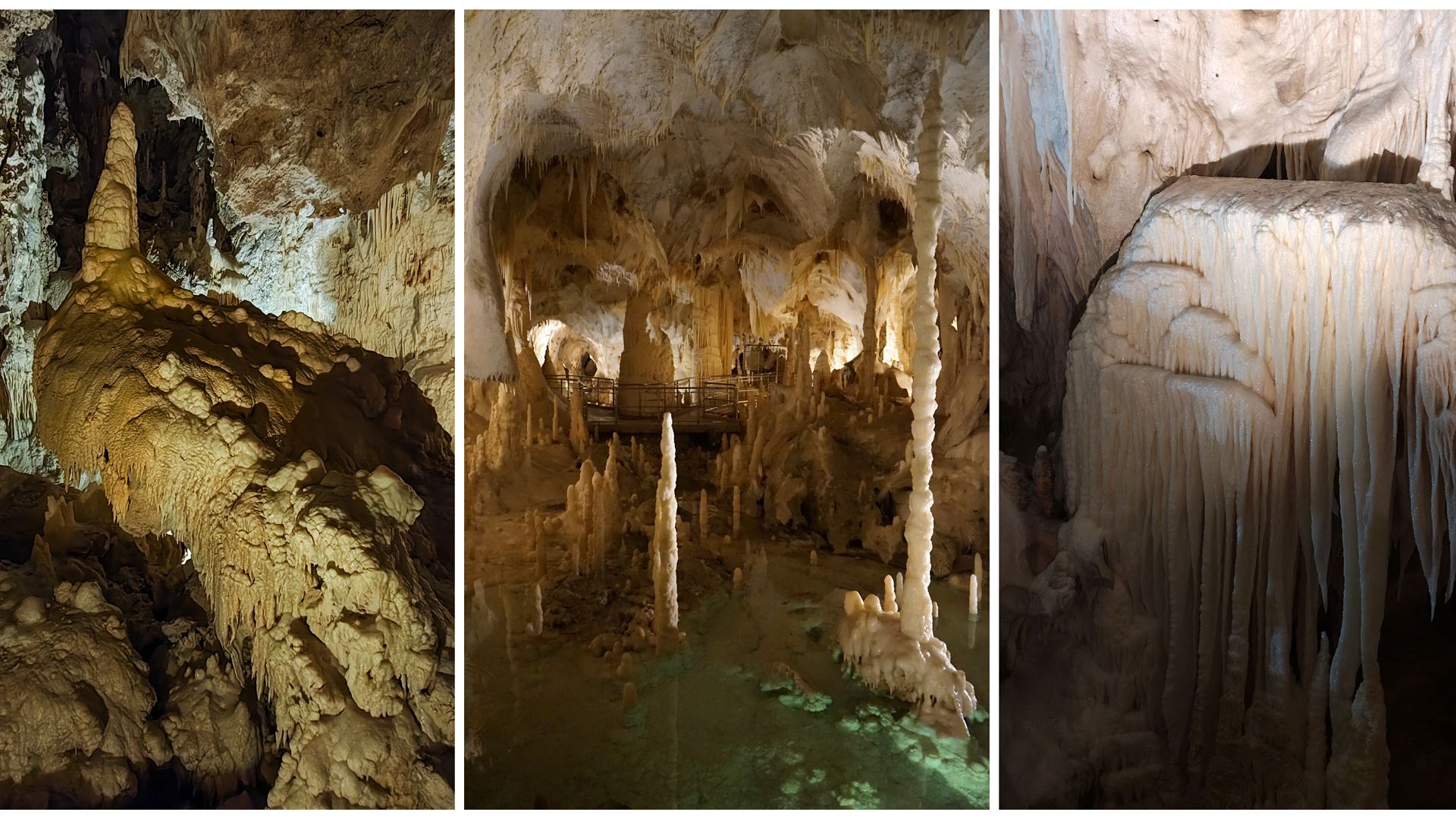
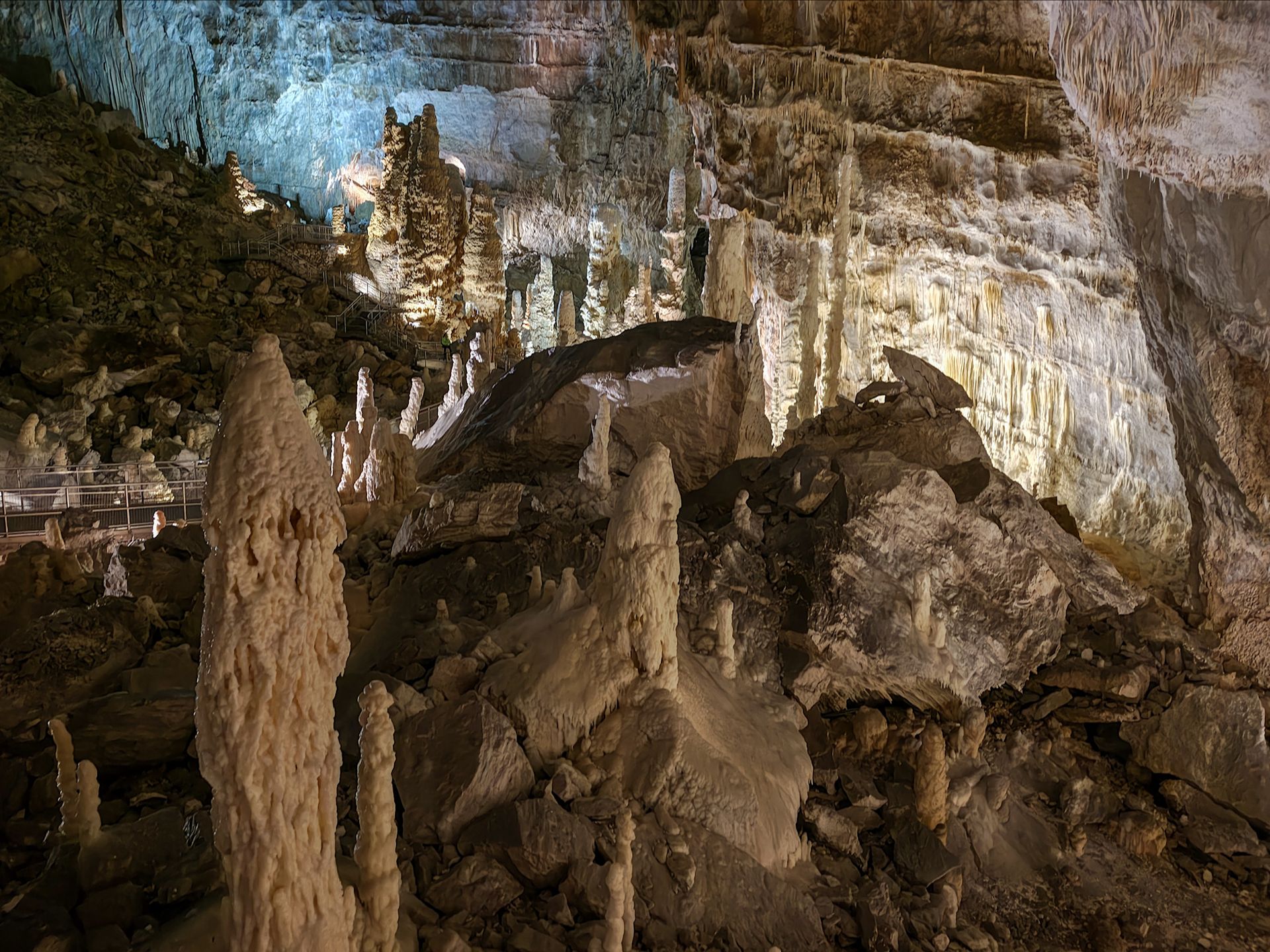
What I can tell you is that the scenery down there is truly mesmerizing. Everywhere you look there are rocks of all shapes and sizes, in shades of light pink, grey, and sparkling white, and your brain can’t help turning them into things.
Stalactites (the ones hanging from the ceiling) look like spaghetti and organ pipes, while stalagmites (the ones growing up from the ground) resemble candles and unicorn horns. And then come the formations that look like bears, dromedaries, and even slices of pancetta, which is Italian cured pork belly (yes, we love cold cuts so much that we see them everywhere, I know).
But it’s not just about the natural beauty. These caves are also a place of real cultural importance. One of Italy’s oldest and most important examples of Paleolithic art was found right there: the Venus of Frasassi, a tiny statuette, about 20,000 years old, carved from a stalactite. To see her in person, she’s at the National Archaeological Museum of Le Marche, in Ancona.
Oh, and shall we talk about the acoustics in there? They’re so unique that over the years the caves have hosted performances by some big names, including Andrea Bocelli, who sung beautifully a cappella (here). Pure magic!
What it’s like to visit the Frasassi Caves
You can only visit the Frasassi Caves with a guided tour, and there are three to choose from: one easy and two for the more adventurous.
The classic choice is the Percorso Turistico (Tourist Trail), a 1.5 km walk that takes just over an hour. If you’d rather channel your inner speleologist, there are also two Speleo Adventure trails that take you to the most hidden corners of the caves, including some short climbings. The dress code in this case requires a jumpsuit, helmet, and boots, all provided on site.
I went for the easy one (I may have walked 170 km from Bari to Matera, but rock climbing? Hmm… no, thanks). The logistics are simple: you buy your ticket, online or on site, then park the car and either hop on the shuttle bus or walk about 10 minutes to the entrance.
There you’ll meet your guide and walk through an artificial tunnel built to let us tourists in. A long, dimly lit passage leading deep into the mountain, with three heavy airtight doors closing behind you. They’re there to stop outside air currents from messing with the caves’ delicate microclimate, but I’ll admit the whole thing gave me serious New Moon vibes (yep, the Twilight saga one), especially the scene where a group of tourists cheerfully follows their guide into the Volturi’s vampire lair.
The first room you’ll see is the Abisso Ancona, and it’s huge. To give you an idea, Milan’s entire Duomo would fit inside comfortably, as the guides always like to point out. This is also the very first spot our speleologists discovered after throwing that famous rock. If you look up, you can still see the opening they came through, while all around you, mighty stalagmites rise dozens of meters from the ground..
The trail then continues through a series of rooms, each filled with a silent crowd of rock figures that the guide helps you spot with a flashlight: a witches’ castle, a bear, the Sword of Damocles (a 7 meters long stalactite as sharp as its name suggests), even the stern profile of Dante Alighieri. I swear I also spotted the bearded face of Hagrid from Harry Potter among the rocks. So keep your imagination ready, because once you start seeing shapes, you won’t be able to stop!
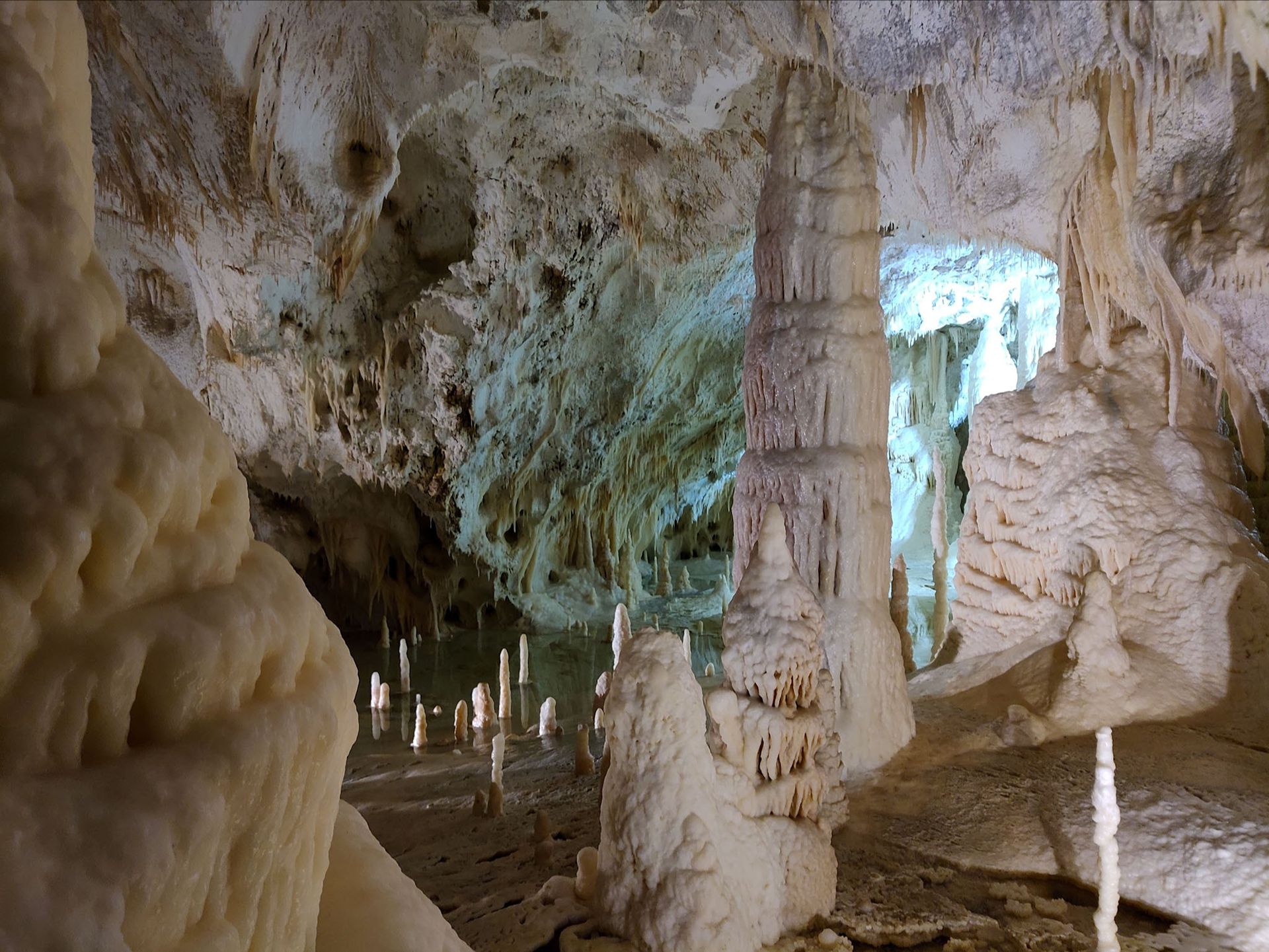
One of the most beautiful sights is la Sala delle Candeline (Hall of the Little Candles): imagine a glassy pool of water, completely still, with dozens of thin stalagmites rising from it, some tall, some barely a stub, looking like little candles whose sides are streaked with dripping wax. Add a soft glow over it all, and you’re inside a storybook — all that’s missing is a fairy godmother with a wand!
Overall, the trail is easy to follow but there are a few flights of steps along the way. Nothing too tough, but if you have mobility issues, check with the organizers before you go to avoid surprises on the day.
How to get to the Frasassi Caves
This natural beauty sits in the Marche hinterland (the entroterra marchigiano, as we say), about 60 km from Ancona, the region’s capital city.
The easiest way to get there is by car, following the state road SS76 towards Rome. Just keep going until you see the exit for Genga, then take it and follow the signs to the caves.
If you’d rather go car-free, hop on a regional train on the Ancona-Rome line and get off at Genga-S. Vittore Terme station. The ride takes just under an hour and costs 6.45 euros one way at the time of writing (see the Trenitalia website). From the station it’s a 15-minute walk to the ticket office (consider it your warm-up for the caves!).
If you’re not sure where to park, or where the station is compared to the entrance, this handy map shows all the parking areas available and the train station.
Naturally, the car gives you more freedom to explore the area once the visit is over. And you’ll want to, because the surroundings are so worth it. The village of Genga and the Temple of Valadier, a neoclassical church magically tucked inside a grotto, are only a short detour away, so it would be a shame to skip them.
You could also combine your trip with a visit to places like Fabriano, the birthplace of the watermark we see on banknotes today, or Jesi, where the Holy Roman Emperor Frederick II was born. And for something truly unique, there’s the Cabernardi Archaeo-Mining Park, home to a former sulphur mine that was once the largest in Europe.
For the Frasassi Caves alone, allow at least 2.5 hours.
Some practical tips for visiting the Frasassi Caves
If you’re looking for family-friendly experiences in Le Marche, definitely add the Frasassi Caves to your list. For kids, it’s a real treasure hunt with so many curious shapes to spot, and you parents, get to enjoy the visit without a single “I’m bored”!
If you can, book the first slot in the morning or visit off season. The caves can get pretty busy, and, needless to say, they’re far more magical when you’re not sharing them with big crowds. You can find opening hours, tour times and all other useful details on the Frasassi Caves website.
Babies and four-legged friends are welcome, but you’ll have to carry them, either in your arms or in a backpack. Strollers can only go up to a certain point, so it’s best to bring a baby carrier with you. As for larger dogs who can’t be carried, they’ll need to wait in one of the designated boxes near the ticket office. Perhaps some dogs wouldn’t mind, but I’d spend the whole visit wondering how mine was getting on—hardly the recipe for a relaxing experience.
The temperature inside is always 13-14°C (55-57°F), so make sure to bring a jacket or a sweater in summer. I’ll confess I stayed in short sleeves the whole time, but then I’m no role model. Most importantly, wear solid sneakers. No flip flops, no heeled sandals. Yes, I saw people with heels, and I still don’t understand what they were thinking.
Photos and videos are allowed (no flash, though), but take a moment to look at what the guide is pointing out with your own eyes, not just through the phone. Of course we all want to come away with a few nice pictures and videos, but no camera does justice to what’s down there.
One last thing (I promise I’m not about to turn into your schoolteacher): touching the rock formations is strictly forbidden, as our hands can cause some serious, irreversible damage. After all, the curious explorers who discovered this wonder over 50 years ago left us something truly special to enjoy, and I’m sure none of us wants to be the onw who spoils the magic.
Questions, doubts, or just want to tell me about your own Italian adventures?
Leave a comment below or send me an email. I love hearing from you and I’m always happy to help!
Ciao for now,