

Table of Contents
Did you know that we have our very own Italian Trans-Siberian railway? Read on to find out more about this historic train line that connects Abruzzo and Molise, offering an incredible journey through fabulous natural sceneries and enchanting villages.

I’m a huge fan of train travels, so you can imagine my excitement when the search for unusual things to do in Italy brought me aboard a historic convoy running through Abruzzo and Molise last year.
It is called the Italian Trans-Siberian railway because it snakes through an unspoiled landscape of mountains, forests, and narrow gorges that resemble the legendary Moscow – Vladivostok route. Ok, the comparison may sound a bit exaggerated, but I traveled on the original Trans-Siberian line a few years ago and I can confirm that the Italian version is equally dramatic.
The train travels along a path of 128 km that was once part of the national railway network and today is one of Italy’s most surprising attractions.
History of the Italian Trans-Siberian
Officially opened on 18 September 1897, the Italian Trans-Siberian train line connects Sulmona, the confetti capital of Abruzzo, with the lacemaking center of Isernia in Molise (by the way, if you’re considering a trip to Molise, this article may be useful)
It’s always been considered an engineering marvel due to the outstanding technical features developed to travel through such an arduous landscape. The route encompasses 21 stations and runs through an impressive network of aqueducts, bridges, and tunnels, the longest of which measures 3,100 meters.
 After being completely destroyed during WWII, the line was reactivated in the 1960s but then gradually abandoned with the advent of high-speed trains. However, in recent years a group of friends with a passion for railways brought the line back to life. They founded Le Rotaie association and teamed up with Fondazione FS (the foundation of the company that manages the Italian rail network) to include this route in Timeless Tracks, a program that looks after Italy’s most beautiful historic train lines.
The original steam locomotive has been replaced by a diesel engine, but the magic of the journey remains unchanged. The train departs from Sulmona at 328m above sea level and reaches an altitude of 1,268 m (about 4,200 feet) at the station of Rivisondoli-Pescocostanzo before starting the descend towards Isernia, which makes this little village at the border between Abruzzo and Molise the second highest railway station in Italy after the Brennero Pass.
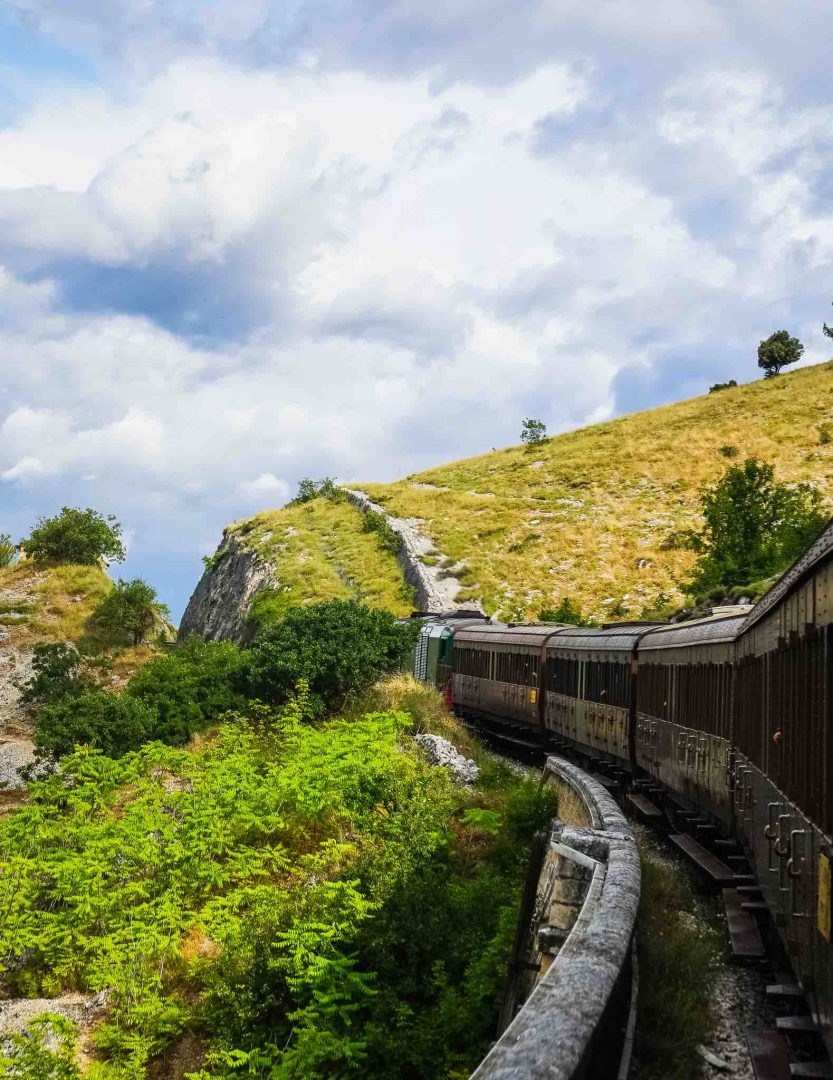 The historic train runs every Sunday year-round and, depending on the season, the trip takes on different routes and thematic itineraries, from wine and food fairs to Christmas markets. The return journey takes an average of eight hours and includes stops for exploring the historic and culinary delights of the area.
Traveling back in time
I arrive at the train station in Sulmona early on a Sunday morning and the train was standing proudly on track 1 with its five big brown carriages. I immediately catch sight of the greenish-gold velvet curtains hung from the windows, allowing glimpses of the shiny wooden benches inside.
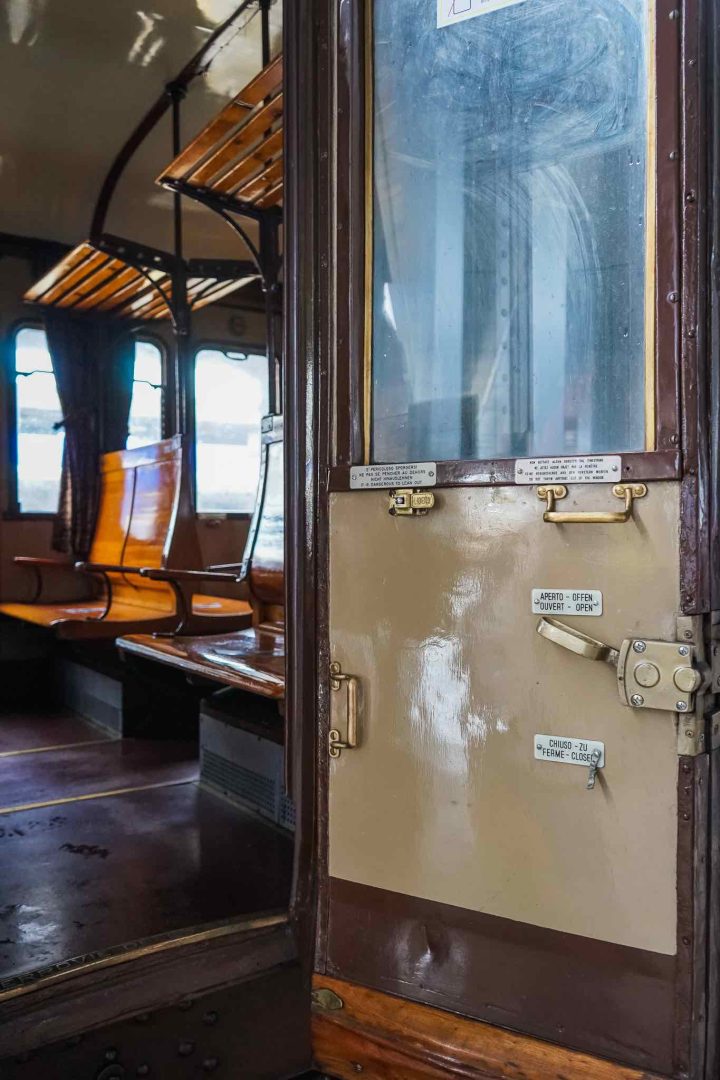
I hop on the train to the tune of traditional songs played by a group of folk musicians who travel with us for the entire trip. Once inside, you’re immediately transported back to the days when train travel was considered a privilege. The interiors are stunning and retain historic features like original brake pads, old prints, and antique lighting. The beautiful vintage wagons are divided into two types of carriages: the “Centoporte” with original wooden benches and the more modern “Corbellini” with red padded armchairs and more panoramic windows.
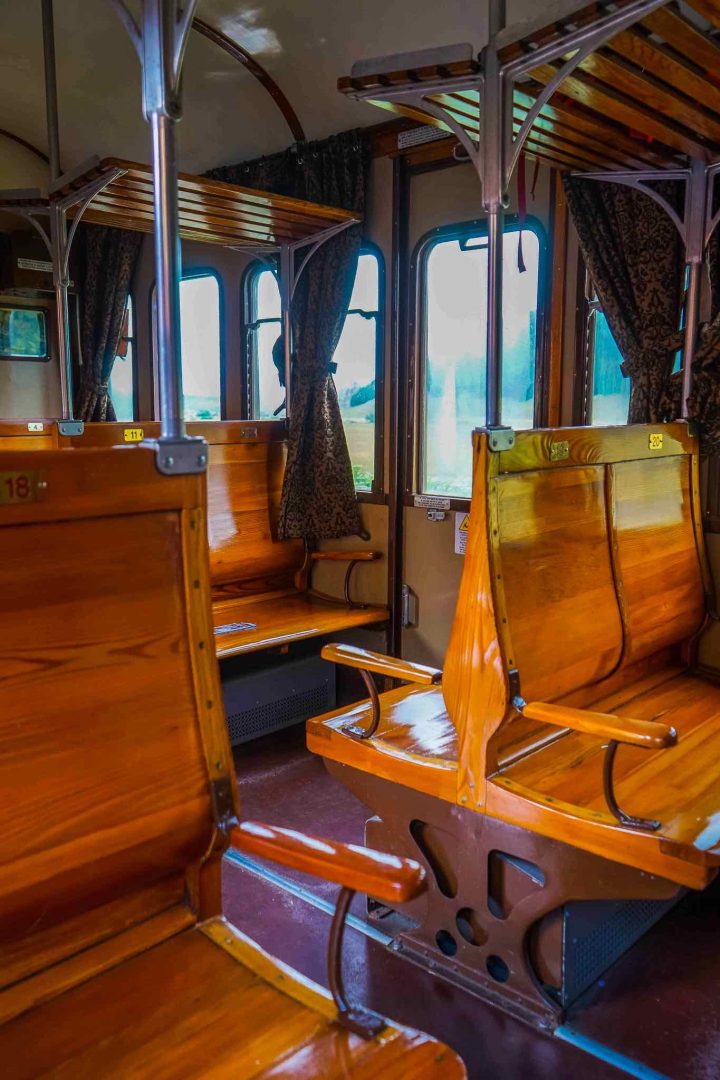 In each carriage there are representatives of Le Rotaie who explain the history and geography of the train line, while the folk musicians keep the atmosphere cheerful, engaging passengers in their performances.
The journey aboard the Italian Trans-Siberian train
At 8:45 am sharp the whistle of the train conductor kick-starts the adventure. After some initial gentle curves, the urban landscape slowly fades, replaced by views of the majestic mountains and viaducts that we’re about to cross.
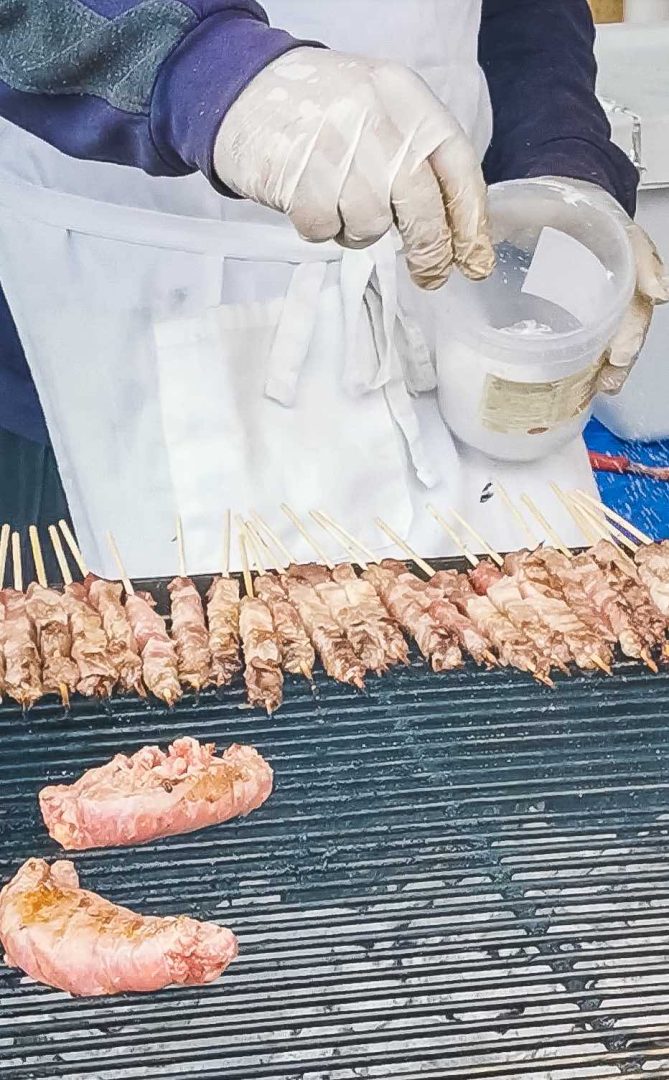
Verdant lands and grandiose mountainous sceneries pass by the windows and after about one hour it’s time for the first stop at Palena, a little village immersed in the Majella National Park. At the station, there are a bunch of colorful stalls selling delicious local snacks like deep-fried pizza with olives and arrosticini (grilled skewers typically made of sheep meat). The center of the village is a little further away and all around are views of the stunning high plateau system known as Altipiani Maggiori.
 Back on the train, we soon reach the highest altitude at the Rivisondoli-Pescocostanzo station and slowly continue downwards through the villages of Roccaraso, Castel di Sangro and Capracotta, the station that officially marks our entry into the region of Molise. Then the train passes through the higher part of Molise before stopping at Carovilli for a technical break. This is an area renowned for the production of excellent caciocavallo cheese and truffles, and passengers can choose whether to disembark and explore the surroundings or continue the journey to the final destination. I’m tempted, but I decide to stay on board to see how the landscape evolves.
 Afternoon break in Carpinone
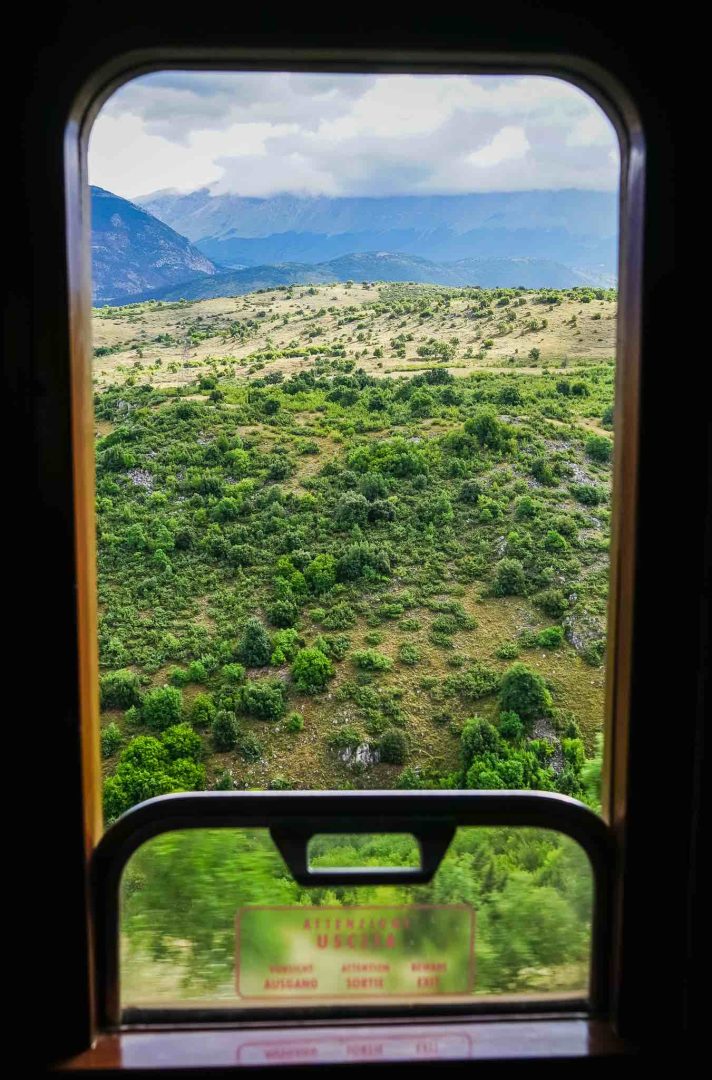
We keep traveling through forests and tratturi (the old pastoral trails), while glimpses of the medieval castle of Pescolanciano and the ancient hamlet of Pesche pass by the windows. Around 1:00 pm we reach Carpinone, the last stop on this itinerary, where we have a few hours to explore the village before returning to Sulmona.
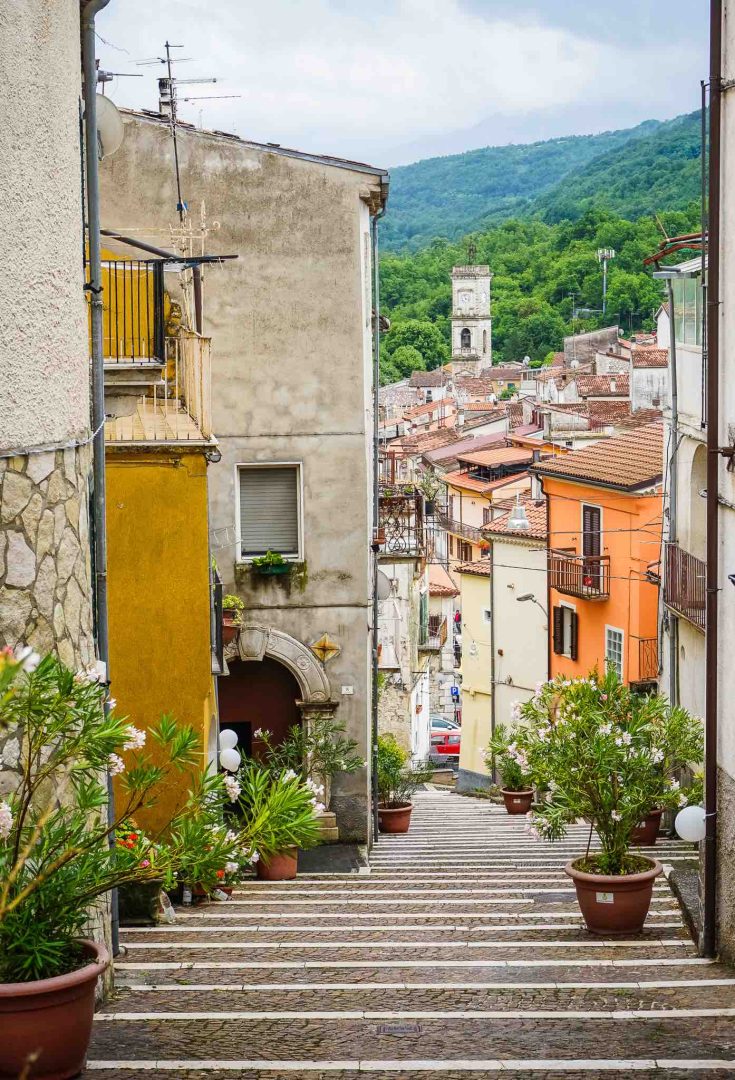
Carpinone is a sleepy village guarded by the remains of the 11th-century Caldora Castle sitting on top of a rocky spur. Its cobbled alleys are a true delight to explore and open onto fascinating corners that are every photographer’s dream. For the more adventurous spirits, there’s the possibility to join a 4×4 off-road excursion organized by Molise Explorer in the countryside around the village.
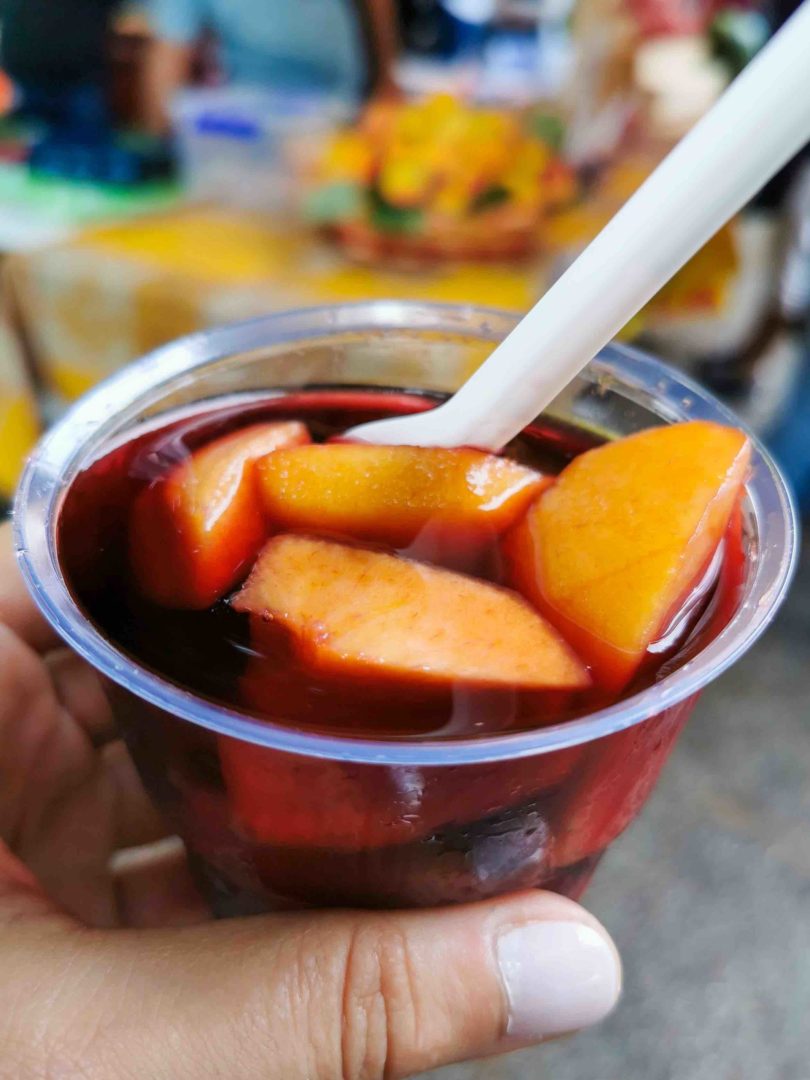
There are food stalls and live music at the back of the station, where I grab a sandwich with cured meat and pecorino cheese followed by a glass of chilled peaches soaked in red wine (aka the “drunken peaches”) to fuel up before setting off to visit the historic center.
 Locals are eager to exchange a few words and before I realize it, I’m sitting at the table of a bar with a lovely lady showing me old newspaper clippings about the history of the Trans-Siberian train. It’s this kind of encounters and conversations that make traveling off the beaten path so special!
At 5:00 pm the train is ready to depart and after a couple of technical stops along the way, we arrive in Sulmona at 8:00 pm. It’s been a super long day, but what an adventure!
How to travel aboard Italy’s Trans-Siberian train
Different itineraries are available throughout the year, you can check the complete schedule on La Transiberiana d’Italia website. For further information, reach out to the guys of Le Rotaie association, they are always extremely helpful.
Return tickets cost 40 euros for adults and 26 euros for children (0-3 years travel for free with no assigned seat, meaning that they must travel in a parent’s lap). You can select the seat of your choice in one of the two types of carriages I mentioned earlier, the “Corbellini” or the “Centoporte”. I suggest booking your tickets with the help of the organizers because when looking at the seat selection page online it’s not clear which coach is what. Once the booking is finalized, you will receive a confirmation by email with the reservation number that you’ll need to show to the conductor during the trip.
 Sulmona train station is located about 1.5 km from the town center and if you’re traveling by car you can easily park in the square in front of it (look for the free spaces on the left-hand side). Alternatively, there’s another free parking just 50 meters from the station.
When boarding the train, look for the coach number printed in red and placed on the windows; the yellow numbers painted on each carriage refer to the old classification.
Small-sized dogs on a secure leash are allowed aboard the train. You can also take strollers and bulky luggage, but these will likely be stored in a special luggage compartment at the end of the train.
Finally, this train trip is amazing in all seasons, but I’ve been told that autumn is the undisputed winner, because of the incredible splashes of color that accentuate the landscape.
Other useful info
If you decide to spend the night in Sulmona before or after the train ride, B&B Susi is only steps from the station and is a good base. Rooms are basic and bathrooms are shared, but the lovely owners keep them spotless, going above and beyond to accommodate any needs. If you prefer something more glamorous, B&B Suite Salini in the town center is a great address.
For those looking to stay overnight in one of the villages reached by the Trans-Siberian train, there are special travel packages that include train tickets and accommodation in local farms and B&B’s, you find them here.
 The Italian Trans-Siberian railway is a precious jewel that perfectly exemplifies the old adage that travel is not about the destination but the journey itself. If you happen to be touring Abruzzo or Molise, do consider taking this unique train ride! Oh, and don’t worry if you do it on a rainy day – I found that a gloomy sky makes the spectacular natural landscape of the area even more dramatic!
If you have any questions about this experience, just leave a note in the comments below or send me an email.
Ciao for now,






This is so beautiful! I love the old fashioned glamour of travelling by train and this guide povides great information.
Thanks a lot Katy, the interiors are really cool and the landscape is fabulous!
wow! This looks so cool! I’ve never heard of it, though partly grown up in Italy. I’ll definitely check this out on my next trip to visit family
Oh yes, do it Linn, it’s beautiful!
Wow this is something, I’ve always wanted to do. Thanks for the useful tips!
Thank you Lucy! Hope you’ll be able to experience this train ride some day soon!
This sounds so exciting and the stops look so serene! Traveling a country by train is definitely on my bucket list 🙂
I love train travel, too! And the more off the beaten path, the better 😉
Hi Valentina, I am a huge fan of train journeys as well. Beautiful photos and a very informative post. I loved those shiny wooden benches. Will definitely save this for future reference.
Aaw, thanks so much Rituparna! I really hope you’ll have the chance to experience it one day, it’s fantastic!
I had no idea Italy had such a train route! It looks absolutely stunning. Will put it on the list for my next trip to Italy… although that list is long as Italy is AMAZING!
Ahah, I can imagine how long your list is…I keep adding new places to mine too! 😀
Wow that must have been quite an experience!! I wish I can do that one day, what a nice way to travel through Italy!
Love this and it is totally on my next Italian adventure!
I had no idea this existed! I’ve only been to Rome, so I’ve got a lot more to see in Italy, but this just might top the list.
Hi, I’m trying to get onto the ‘Italian Trans-Siberian railway’. Looking at doing the train ride from Sulmona in July 2024. Do you knowhow can find out the dates the Trans- SIberian raikway is leaving from Sulmona. WHere to purchase tickets, please.
I’ve seen this on television in Australia and thought what an amazing train ride. So my wife and I decided when in Italy we must do,so here we are in sulmona hoping to do the train ride. How do we purchase tickets please.
Ciao Alberto! Yep, it’s an amazing experience, highly recommended 🙂
So, the website seems to have changed from the last time I used it for booking tickets, that’s what I’ve found: https://ferroviadeiparchi.it/biglietteria-ferrovia-dei-parchi/ (only in Italian, though)